


Thanks to the New Rural Development program, Ta Xua commune in Son La province is gradually transforming with improved infrastructure, a higher standard of living, and thriving tourism in the highlands.
Developing agriculture and infrastructure in a coordinated manner.
Ta Xua commune, located in Son La province, was formed by merging three former communes: Ta Xua, Hang Dong, and Lang Cheu, with a total natural area of 23,367 hectares. The commune is approximately 240 km from Hanoi, situated at an average altitude of 1,500 to 2,000 meters above sea level. The commune currently comprises 13 villages with 1,825 households and 11,209 inhabitants, of which the Mong ethnic group accounts for 99.87%.
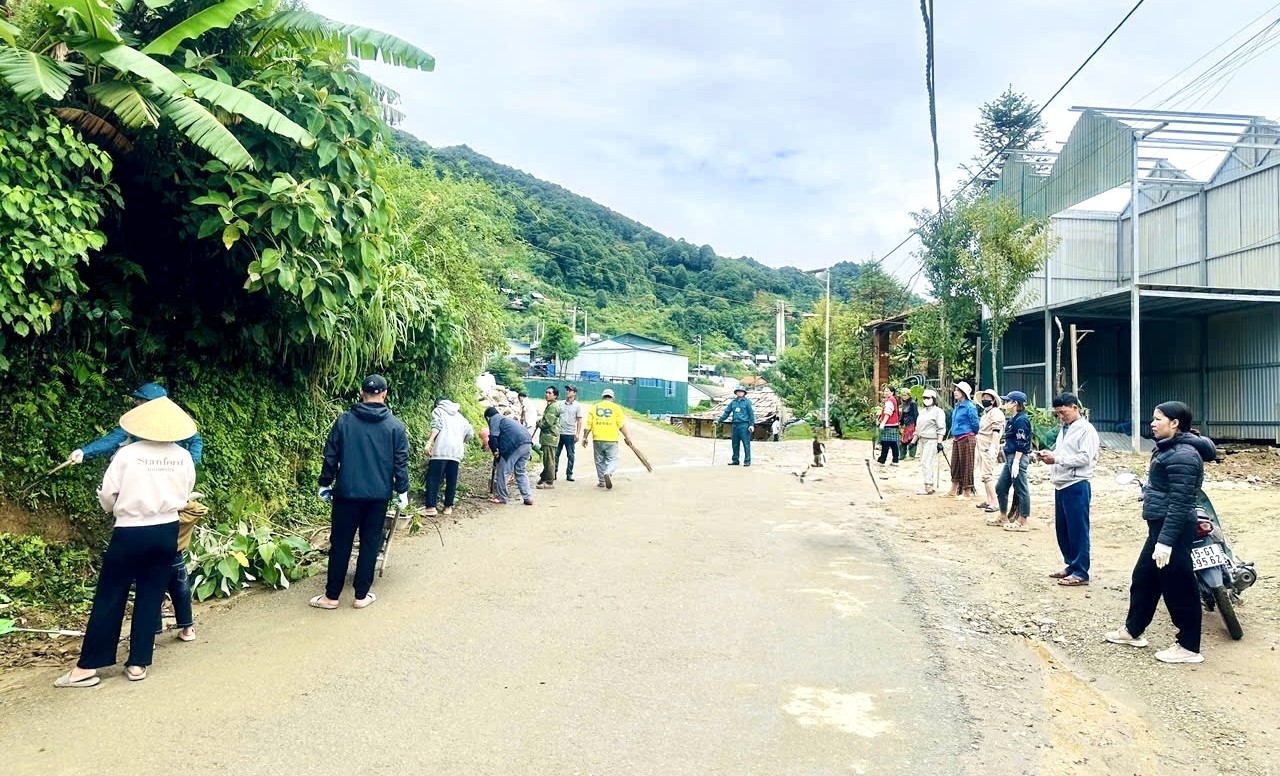
Residents of Ta Xua commune, Son La province, participate in cleaning and clearing village roads and alleys as part of the new rural development movement, contributing to maintaining a green, clean, and beautiful landscape.
Mr. Do Van Xiem, Chairman of the People's Committee of the commune, shared: "To successfully implement the new rural development program, the team of officials and civil servants, along with the village management board, have always been at the forefront and exemplary in fulfilling criteria such as building bathrooms, toilets, incinerators, and concreting house foundations, ensuring the 'three solid' criteria. At the same time, the alleys and lanes are kept clean, contributing to creating a green, clean, and beautiful landscape."
However, Mr. Siem also frankly acknowledged the remaining difficulties: "As a commune with a low starting point, the completion of criteria among the merged areas is still uneven. Land management and construction order still face many complexities. In addition, the practice of free-range grazing, child marriage, and some outdated customs still persist, significantly affecting the quality and progress of the new rural development program."
Regarding capital construction investment, as of the end of January 2025, the systemtrafficThe commune has basically completed infrastructure development with 87.3 km of paved roads of all types. The irrigation system spans 47.3 km, and 92.3% of villages have paved roads leading to the commune center; 99% of households use safe electricity for daily life; and 100% of households use clean and hygienic water for daily life.
The commune has stable small-scale industrial establishments, including 6 cassava starch processing workshops, the Hiep Khach tea processing cooperative, Pla... At the same time, the commune maintains many traditional crafts such as brocade weaving, embroidery, blacksmithing, and carpentry, contributing to the preservation of the ethnic cultural identity.
The agricultural, forestry, and fisheries sectors have developed steadily with a total cultivated area of approximately 4,088 hectares, including 2,065 hectares of grain crops (1,929 hectares of rice and 136 hectares of corn); 305 hectares of root crops; 440 hectares of industrial crops (tea); 61.5 hectares of vegetables and legumes; and 81 hectares of grassland.
Aquaculture is developed in areas with favorable climates, taking advantage of the surface water of lakes and hydroelectric dams. The commune actively promotes and encourages people to gather livestock for breeding, while also guiding them in changing the structure of crops and livestock and effectively controlling pests and diseases.
Regarding irrigation, the commune organized a campaign to dredge, repair, and reinforce irrigation structures to ensure stable irrigation for the fields. A review revealed that the irrigation systems in the area are operating very effectively.
Tourism development is closely linked to national culture.
From a little-known highland commune, Ta Xua has now become an attractive destination with many famous landmarks such as Ta Xua Cloud Paradise, Ban Be Tea Hill, Dolphin Head, Ta Xua Grassland..., attracting a large number of domestic and international tourists.
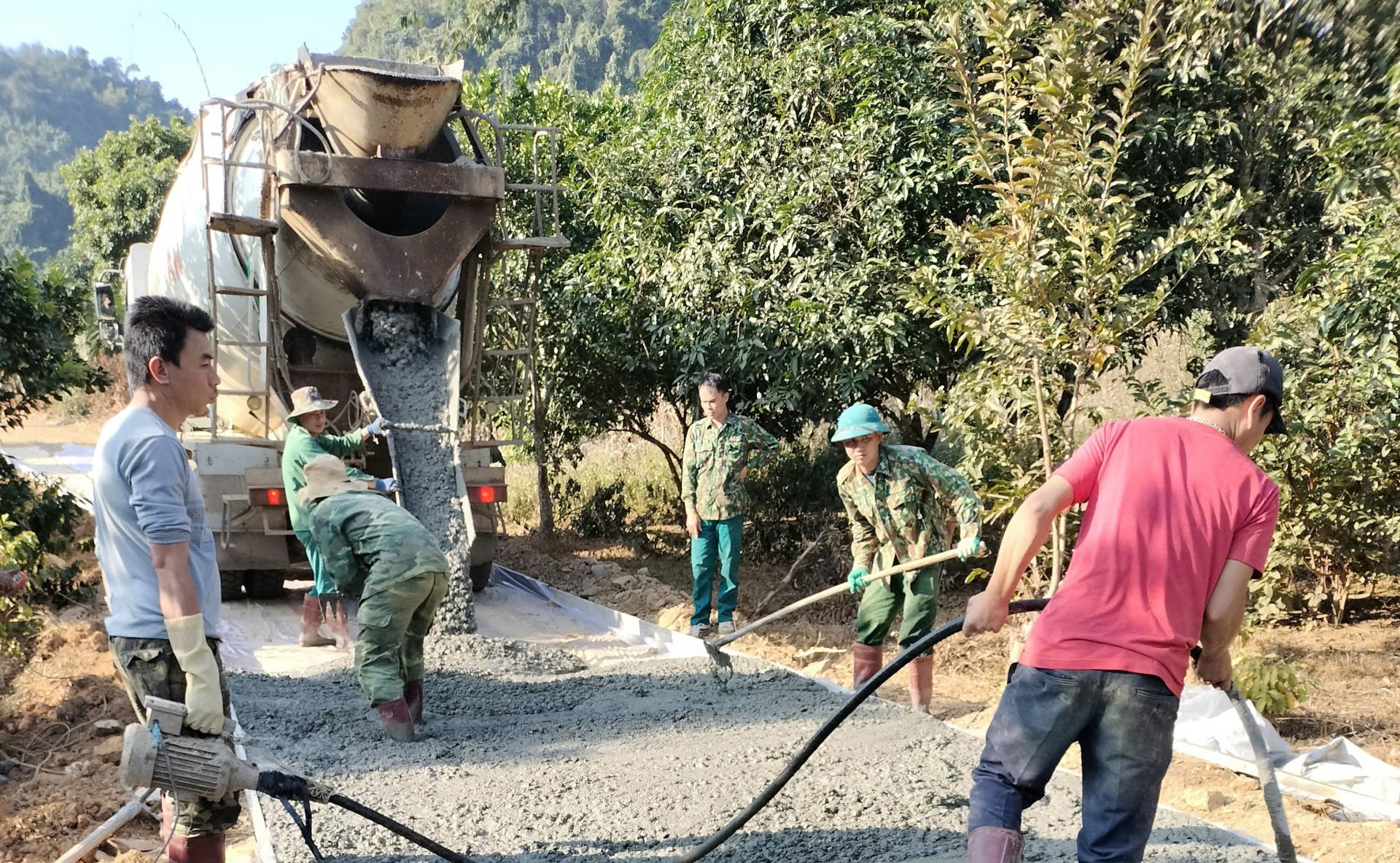
The inter-village road has been concreted, making travel more convenient for the people and contributing to the completion of the transportation criteria in the new rural development program.
With its majestic natural landscapes, cool climate year-round, and rich ethnic culture, the commune is implementing tourism development solutions based on strategic planning, while also strengthening promotion and advertising of the destination. State management is being intensified to ensure safety and order, in accordance with traditional customs and values, and to promote traditional cultural values.
Currently, the commune has 148 business households, including 88 households operating community guesthouses, accommodating approximately 1,500 guests per day and night, along with 60 households providing other services. In the first nine months of 2025, the commune welcomed approximately 124,425 visitors, including 2,180 international tourists, with total revenue estimated at 70.3 billion VND.
The commune has 7 schools, of which 5 meet Level 1 standards, with a total of 124 classes and over 3,400 students. The school attendance rate is 86.7%, and 100% of 5-year-olds attend school. Universal education is firmly maintained at the primary and lower secondary levels. Infrastructure is invested in through social mobilization; schools organize well-structured meals and life skills education for over 950 boarding students.
In terms of healthcare, the commune has three basic health stations with modern equipment to meet the needs of medical examination and treatment. The medical staff is constantly being improved in both quality and quantity. National health programs are implemented promptly; healthcare for the poor and children under 6 years old is given special attention.
Mr. Nguyen Huu Son, Head of the Culture and Social Affairs Department, said: "The 'All People Unite to Build a Culturally Rich Life' movement has been actively, synchronously, and comprehensively implemented. Traditional cultural and sports activities, especially the unique characteristics of the Mong ethnic group, continue to be preserved and strongly promoted."
Mr. Son also shared: "The community centers in the villages have been invested in and upgraded with equipment to meet the spiritual needs of the people. To date, 11 out of 13 villages have been recognized as 'Cultural Villages', making an important contribution to building grassroots cultural life."
The commune effectively implements social welfare policies, promptly paying allowances to beneficiaries of social protection programs and other policies. The living conditions of the people are closely monitored to provide timely support. Efforts in childcare, gender equality, and the prevention of social evils are being intensified.
In the coming period, Ta Xua commune will continue to improve the effectiveness and efficiency of the Public Administration Center by investing in upgrading the qualifications, skills, and service attitude of its staff and civil servants.
At the same time, the commune will focus on effectively implementing the Party's guidelines and the State's policies and laws on security and order, mobilizing the strength of the entire population to ensure security at the grassroots level. The commune will also prioritize stabilizing the lives of people in remote areas, limiting uncontrolled migration, preventing illegal missionary activities, and resolving pressing issues at the grassroots level.
Ms. Giang Thi Dia (68 years old, Hang Dong village) shared: "The government has supported my family in building livestock pens, teaching us how to plant trees and raise cattle. Now, my family has escaped poverty. The village is also cleaner and more beautiful than before, and we women have learned more skills, know how to maintain hygiene, and take care of our children's education."
With outstanding achievements in building new rural areas, Ta Xua is gradually undergoing a strong transformation, not only improving the material and spiritual lives of its people but also becoming a bright spot for tourism, contributing to promoting sustainable socio-economic development in the mountainous region of Son La.