


VOV.VN - To celebrate the successful conclusion of the 16th Provincial Party Congress, term 2025-2030, and the 130th anniversary of the founding of Son La province (October 10, 1895 - October 10, 2025), today (October 2), the People's Committee of Son La province inaugurated the exhibition "Son La - Historical Imprints through Archival Documents".
The exhibition space is designed in three sections: historical milestones regarding the administrative boundaries of Son La province; Son La - The period of struggle to protect the government and build the country; and Son La - The period of innovation and development. Nearly 200 copies of documents, images, and maps of significant historical value have been selected, comprehensively reflecting the formation and development of Son La province through various periods.
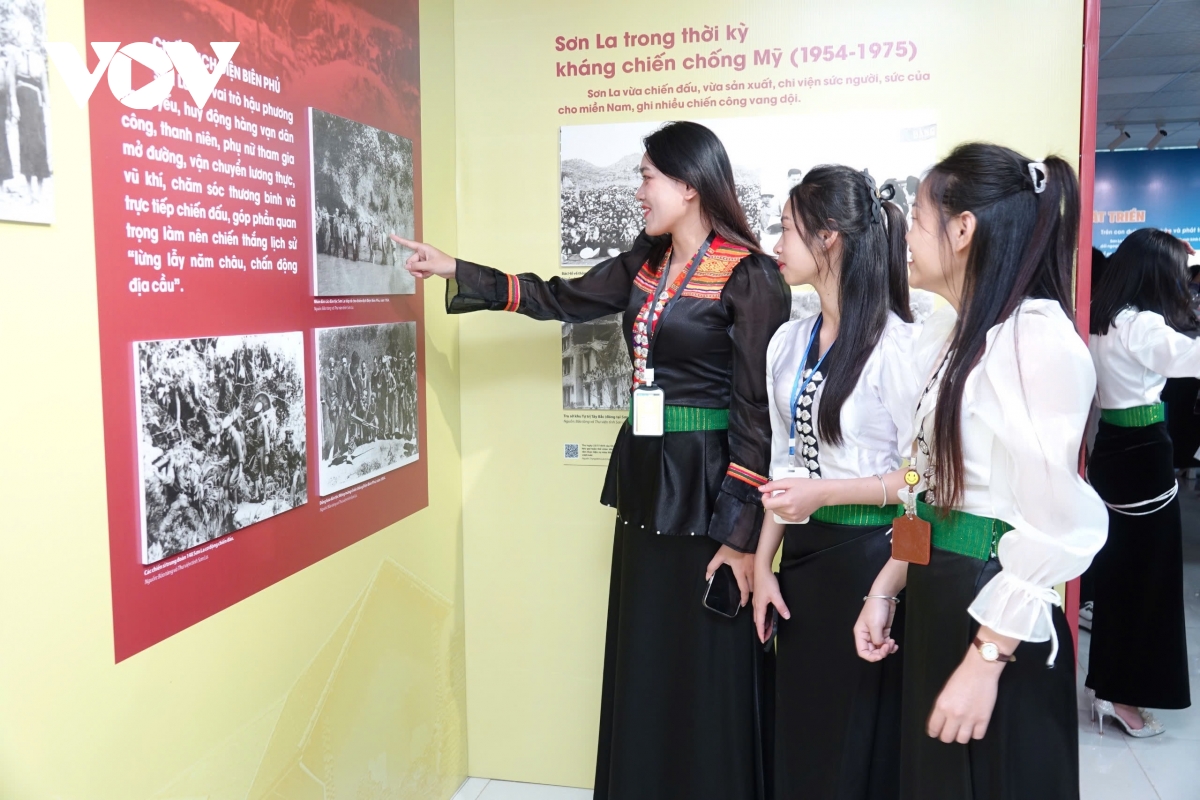
People in Son La visit the exhibition space displaying documents.
Along with that, images and documents on socio-economic development, education and training, healthcare, national defense and security, international cooperation, and the tangible and intangible cultural heritage of the 12 ethnic groups vividly recreate the nearly 40-year journey of reform; the great and comprehensive achievements in all fields serve as a foundation for Son La to continue its green, rapid, and sustainable development.
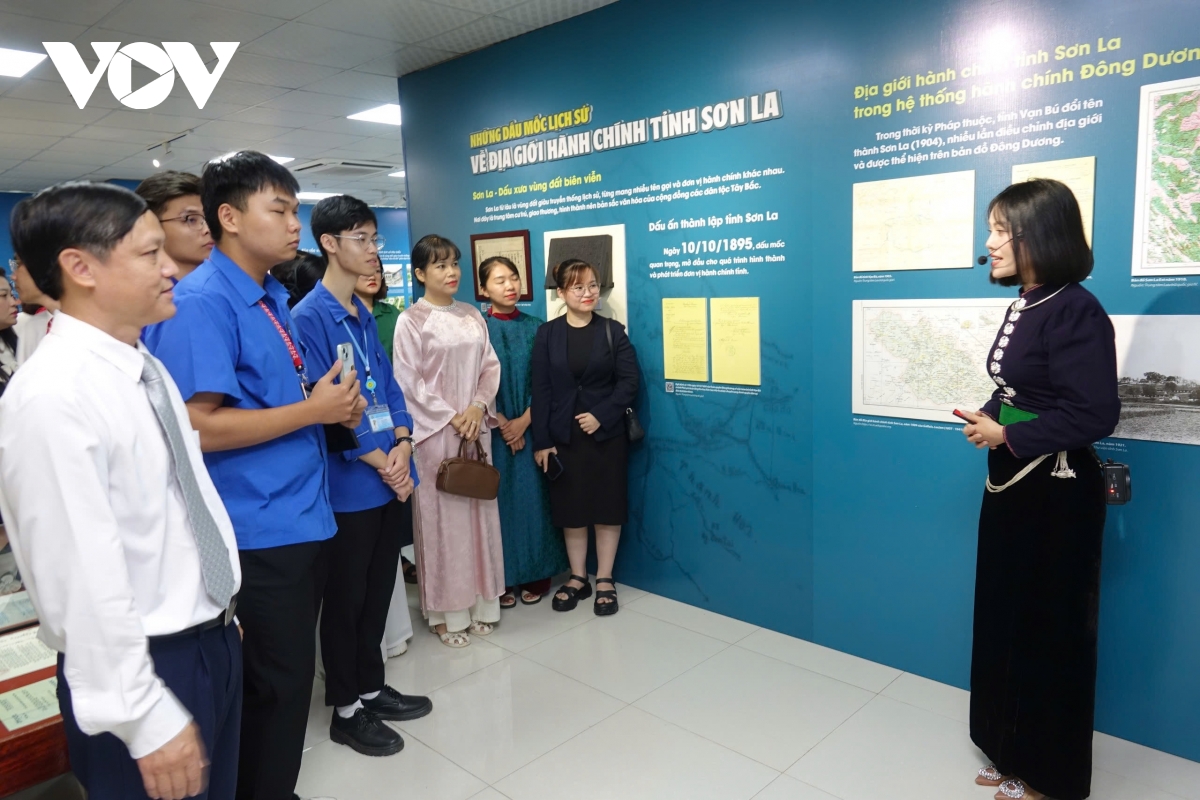
The exhibition space attracts students to visit and experience it, helping them understand, appreciate, and promote the value of the archived heritage.
Speaking at the opening ceremony of the document exhibition, Mr. Dang Ngoc Hau, Vice Chairman of the Son La Provincial People's Committee, requested that the Department of Internal Affairs and the Provincial Historical Archives Center should promote the application of digital technology, build electronic databases, and move towards forming a "Digital Archive" to facilitate convenient searching for officials and the public; proactively organize regular thematic exhibitions, bringing archival documents closer to the public.
Simultaneously, the directive instructs departments, agencies, and localities to coordinate in collecting, exploiting, and utilizing archival documents, considering them an important source of historical data for research, policy planning, and traditional education; and to encourage the public, students, and university students to visit and experience these archives to understand, appreciate, and promote their value, serving as a bridge to bring history closer to the community.