


With over 80,000 hectares of fruit trees and hundreds of OCOP (One Commune One Product) products, Son La has established itself as the "fruit basket" of Northern Vietnam. However, for agricultural products to truly thrive, a comprehensive approach is needed.
Establishing over 80,000 hectares of high-quality fruit trees.
On the morning of October 4th, at the Moc Chau National Tourist Area, the Son La Provincial People's Committee, in coordination with the Provincial Business Association, organized the 2025 Businessmen's Coffee Program with the theme "Connecting Businesses and Cooperatives in the Agricultural Product Value Chain".
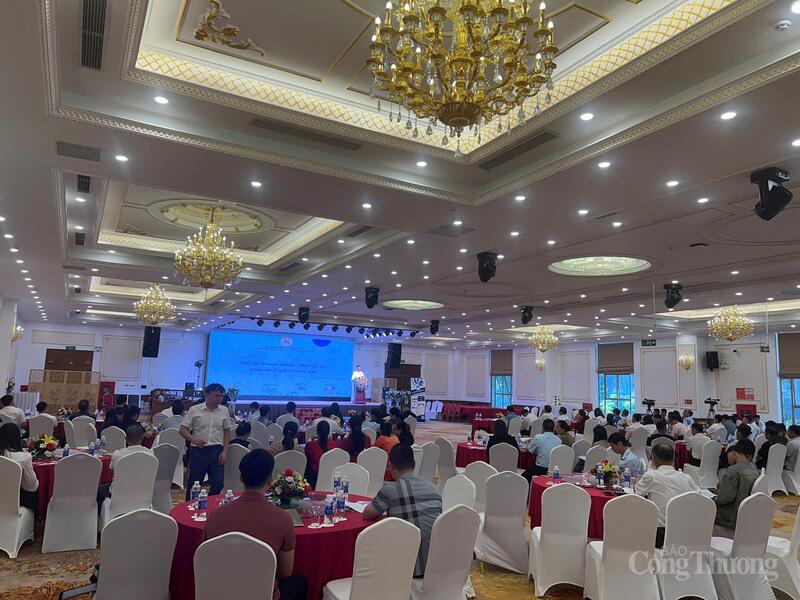
The 2025 Business Coffee Program has the theme "Connecting Businesses and Cooperatives in the Agricultural Product Value Chain".
Speaking at the event, Mr. Nguyen Quoc Khanh – former Vice Chairman and Chairman of the Son La Provincial Business Association – stated that from a mountainous province with predominantly sloping terrain and limited infrastructure, Son La has undergone a strong transformation, rising to become the largest fruit-growing center in the North and a shining example of high-tech agricultural development nationwide. High-tech agriculture has become and continues to be an important factor in improving the lives of local people.ethnic minoritieslocal.
According to statistics from the Son La Provincial People's Committee, by 2025, the province will have over 80,000 hectares of fruit trees, including 24,300 hectares of coffee with an estimated production of nearly 38,000 tons, of which over 28,000 tons will be certified for sustainable production according to international standards. The province has established two high-tech coffee growing areas in Mai Son along with nine industrial processing facilities, contributing to the increasing recognition of Son La coffee brand in domestic and international markets.
With tea plants,Son LaWith nearly 6,000 hectares of cultivated land, the estimated yield is around 60,000 tons, encompassing many famous specialty tea regions such as Ta Xua, San Tuyet, and Moc Chau. Over 20 businesses and cooperatives are involved in processing and exporting, including prominent brands like Vinatea Moc Chau, Tan Lap Tea, and Moc Suong Tea. In addition, approximately 10,000 hectares of sugarcane yield 500,000 tons; over 44,000 hectares of cassava yield nearly 540,000 tons; and various vegetables and short-term industrial crops continue to maintain stable and diversified raw material sources for processing.
Not only crops, but also the aquaculture and livestock sectors have seen strong development. The province currently has over 2,900 hectares of water surface, 6,900 cages and rafts, with a production of over 2,600 tons. Livestock farming has grown significantly, especially the Moc Chau milk brand, which has become a famous product throughout the country.
"After 10 years of implementing the policy of planting fruit trees on sloping land, tens of thousands of hectares of unproductive land have been converted to growing mangoes, longan, plums, oranges, pomelos, avocados, and passion fruit, creating vast fruit-growing areas and providing stable income for farmers. To date, Son La has 308 safe agricultural product chains and 214 OCOP products, many of which, such as pure ground coffee, Moc Chau tea, Yen Chau mangoes, Song Ma longan, and Moc Chau plums, have established their position in domestic and international markets."—Mr. Nguyen Quoc Khanh shared.
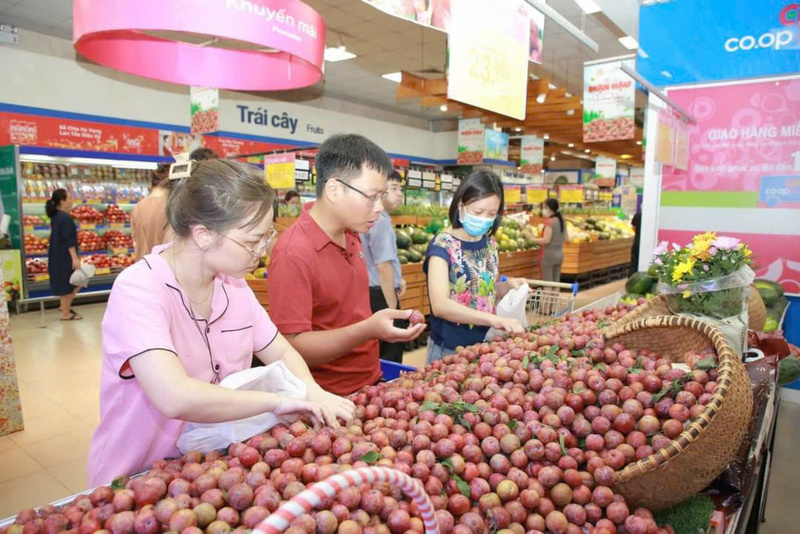
Agricultural products from Son La are sold through a modern distribution system (Photo: Mai Hoa)
Along with the development of agricultural production, Son La currently has more than 4,200 enterprises with a total registered capital of over 90 trillion VND and more than 1,000 cooperatives. Many enterprises and cooperatives have become "nuclei" in the value chain, signing production linkage contracts with farmers and forming concentrated raw material areas. Examples include the coffee linkage model of Phuc Sinh Son La Company, the mango raw material area of Dong Giao Company, and the high-tech longan growing area of Phuong Nam Yen Chau Cooperative.
Simultaneously, agricultural processing plants such as Doveco, Nafoods, IC Food, Son La Sugar Mill, and Vinatea Moc Chau have consumed hundreds of thousands of tons of agricultural products, expanding export markets to China, Japan, South Korea, and the EU. Many young businesses have also boldly started ventures in the fields of clean agricultural products, organic farming, and e-commerce, bringing Son La products to major e-commerce platforms.
These achievements have affirmed the role of businesses and cooperatives as the core force contributing to transforming Son La's agricultural products from small-scale production to commodity production, closely linked in a sustainable value chain.
Proposed solutions to boost agricultural product consumption in the coming period.
Despite its achievements, Son La still faces many challenges: some linkage models are not yet well-structured; raw material areas are scattered and of inconsistent quality; logistics and cold storage systems are lacking; the rate of deep processing is low; many small businesses lack capital, making it difficult for them to invest in technology and digital transformation.
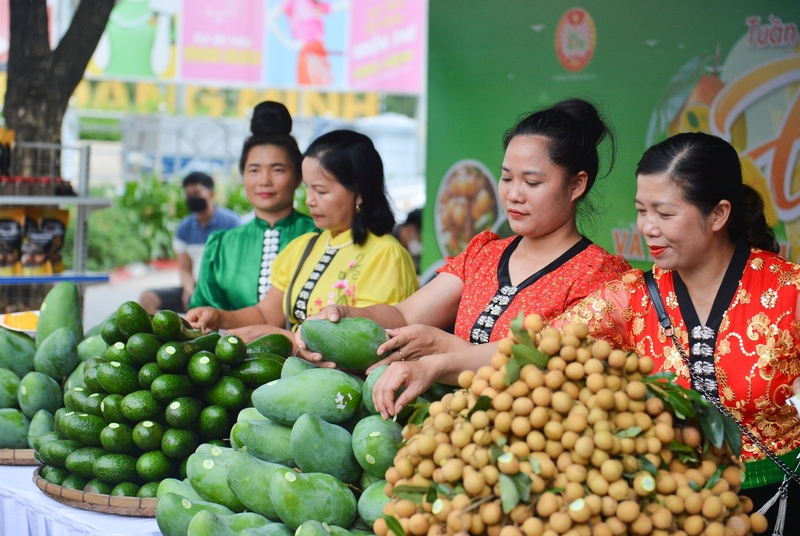
The business community and cooperatives in Son La have put forward many specific recommendations to enhance competitiveness and boost agricultural product consumption in the coming period.
To overcome these limitations, the business community and cooperatives in Son La have put forward many specific recommendations to enhance competitiveness and boost agricultural product consumption in the coming period.
The first,Departments and agencies need to coordinate effectively in implementing the Central Committee's resolutions and the province's action plan, while also issuing specific policies to encourage businesses to invest strongly in high-tech agriculture, deep processing, and the development of raw material areas that meet international standards.
Monday,Supporting businesses and cooperatives in upgrading equipment and applying modern technology in post-harvest processing and preservation, while promoting the application of digital technology in production management, e-commerce, and traceability – key to meeting international standards.
Tuesday,Investing in the synchronized development of logistics infrastructure, cold storage systems, specialized logistics centers for agricultural products, and modern transshipment and preliminary processing stations right in the raw material areas; upgrading key transportation infrastructure connecting to seaports, border gates, and major consumption centers nationwide, in order to reduce costs, minimize post-harvest losses, and extend shelf life.
Wednesday,Promoting linkages between businesses, cooperatives, and farmers through long-term, transparent production-consumption contracts; building a close coordination mechanism between leading enterprises and cooperatives and farming households to share benefits and risks, aiming for sustainable development, linking production with processing and consumption.
Thursday,Strengthening trade promotion, advertising, brand building, and robust development.e-commercePlatforms like Shopee, Lazada, TikTok Shop, and Sendo need to become the main channels to bring Son La's agricultural products to millions of customers both domestically and internationally. Simultaneously, developing models that combine agriculture with ecotourism and agricultural tourism, creating experiential tours in orchards, coffee plantations, tea plantations, etc., will transform tourists into customers and promoters of the products.
Mr. Nguyen Quoc Khanh affirmed that each unit needs to focus on development.trademarkThis product is unique and simultaneously associated with the overall brand "Son La Agricultural Products - Green, Safe, and High-Quality," thereby affirming its reputation and enhancing its position in the international market.
With its outstanding advantages and synchronized solutions, Son La has the foundation to continue maintaining its role as a center for green agriculture, high technology, and ecotourism in the Northwest region. The close cooperation between businesses, cooperatives, and farmers, along with the support of the government, will be key to enabling Son La's agricultural products to reach further markets, contributing to the green, rapid, and sustainable development of the local economy.