

Son La province is home to 12 ethnic groups, each with its own distinct cultural identity. Along with preserving and promoting traditional cultural identities, local authorities have transformed culture into a crucial resource for tourism development. From festivals and folk songs to traditional crafts and community living spaces, these elements are preserved, restored, and transformed into attractive tourism products that draw visitors for exploration and unique experiences.

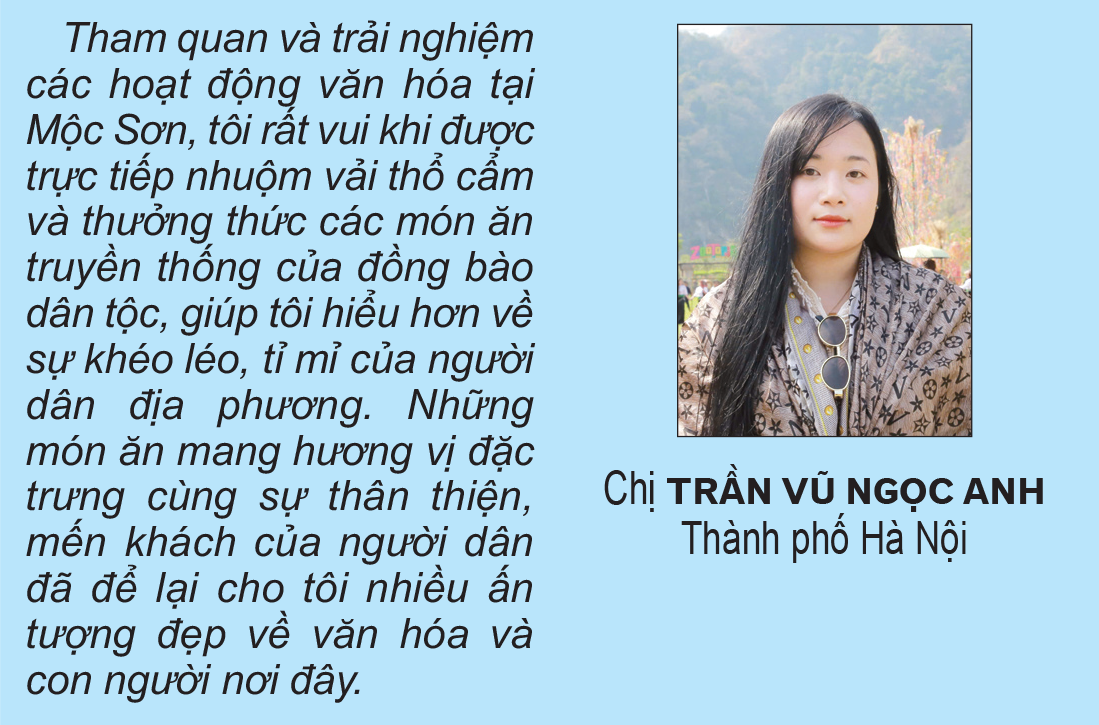
Tourists visit a traditional weaving workshop run by the Thai ethnic minority in Moc Son ward.
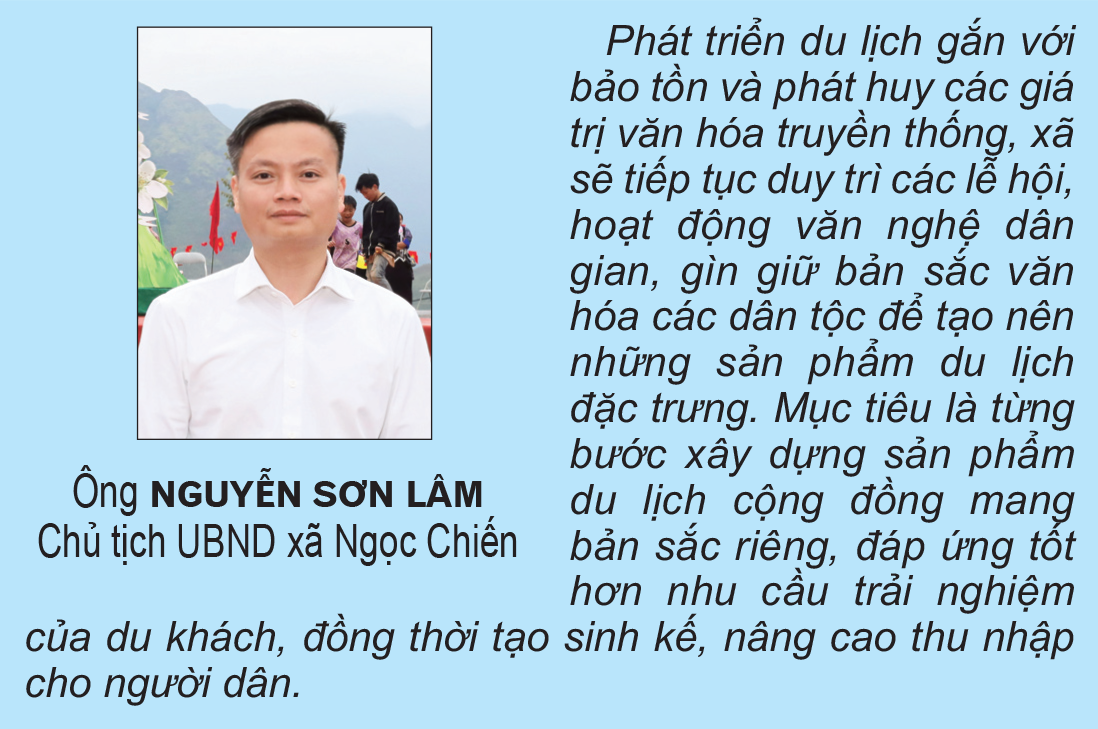
Ngoc Chien commune is home to four ethnic groups: Thai, Mong, La Ha, and Kinh. Recognizing traditional culture as a crucial resource for developing community tourism, the local authorities have implemented numerous solutions to preserve and promote the cultural identities of these ethnic groups. These include focusing on preserving the traditional stilt houses of the Thai people; conserving the cultural space of the Lau Xa stone jar of the La Ha people; preserving the cultural space of the Mong people in Chom Khau village; and the Nam Nghep hawthorn flower forest. The Thai people's New Rice Festival is held annually in early September, and the Hawthorn Flower Festival in Nam Nghep village is held in March, both featuring folk cultural and artistic activities. Traditional crafts such as rattan and bamboo weaving of the Thai people and beeswax pattern painting on linen fabric of the Mong people are preserved and maintained, enriching community tourism products and enhancing the attractiveness of Ngoc Chien as a destination.

Local cultural values are effectively utilized in tourism activities.
In addition, Ngoc Chien commune maintains a mobile performing arts team and 15 amateur performing arts teams in the villages, regularly practicing traditional dances and songs of the Thai and Mong ethnic groups to serve the people and tourists. The teaching of folk art forms is carried out regularly with the participation of artisans; at the same time, historical and cultural folk tales are collected and preserved. The locality also focuses on training a team of tour guides to meet the needs of tourists seeking to learn and experience. From the beginning of the year until now, Ngoc Chien commune has welcomed over 65,000 visitors, generating revenue of approximately 4.2 billion VND.
Located within the Moc Chau National Tourist Area, Moc Son ward focuses on preserving and promoting the cultural identity of six ethnic groups – Thai, Muong, Mong, Dao, Tay, and Kinh – in conjunction with tourism development. Among them, the Het Cha Festival of the Thai ethnic group has been recognized as a national intangible cultural heritage, a unique cultural highlight attracting tourists. Traditional crafts such as dyeing and brocade weaving are maintained; folk art troupes continue to preserve and promote the distinctive folk songs, dances, and traditional dances of the ethnic groups, contributing to the diversification of tourism services and creating more appeal for visitors. From the beginning of the year until now, the ward has welcomed over 528,000 visitors, generating revenue exceeding 316 billion VND.

Homestays featuring traditional stilt house architecture add a unique touch to community tourism in Ngoc Chien commune.
It is evident that culture is not only a valuable spiritual asset but also a crucial resource for tourism development. To date, Son La province has fully inventoried and identified the cultural heritage of nine ethnic groups, including the Thai, Mong, Dao, Muong, Xinh Mun, Kho Mu, La Ha, Lao, and Khang. Thai Xoe dance has been recognized by UNESCO as a representative intangible cultural heritage of humanity; there are 20 national intangible cultural heritage sites; and 96 historical and cultural relics and scenic spots. Along with this, the province pays special attention to preserving the spoken language, written script, folk songs, folk dances, traditional costumes, handicrafts, folk knowledge, and unique festivals. Festivals such as Hoa Ban, Het Cha, Gau Tao, Pang A, and Cau Mua are held annually, meeting the cultural needs of the people and becoming attractive tourism products.
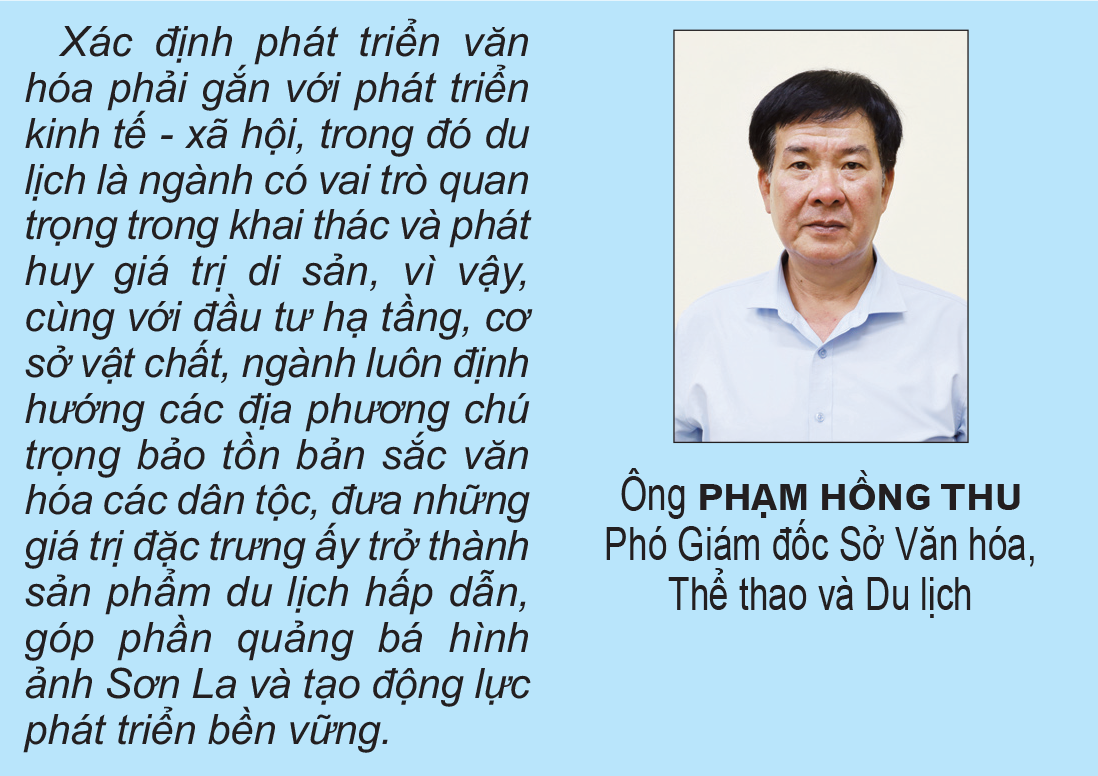
Cultural preservation combined with tourism development is opening up a sustainable path for many localities in the province. When traditional values are preserved, promoted in the right way, and become unique tourism products, it contributes to improving the lives of the people and building the image of Son La as a destination rich in identity, friendly, and attractive to domestic and international tourists.
Thu Huyen